
Charleston’s Lowcountry charm comes with a climate unlike almost anywhere else in the country, combining coastal salt air with some of the heaviest humidity in the Southeast. That mix of moisture rolling off Charleston Harbor and the surrounding marshes, paired with salt particles carried on the breeze from the Atlantic, creates a genuinely demanding environment for vehicles. Where many cities deal with either humidity or salt exposure, Charleston deals with both simultaneously for much of the year, and that combination shortens the life of belts, hoses, and undercarriage components faster than either factor would on its own.
Why Charleston’s Combination Is Especially Tough On Vehicles
Salt is corrosive on its own, and humidity accelerates nearly every chemical process involved in rust formation and rubber degradation. When both are present consistently, as they are throughout most of the Lowcountry’s warm season, the effects compound rather than simply adding together. Salt particles settling on metal surfaces create an ideal starting point for corrosion, and the near constant moisture in Charleston’s air ensures that starting point rarely has a chance to fully dry out before the next humid day arrives.
Areas like downtown Charleston and the Battery, which sit close to the water and occasionally experience tidal flooding during particularly high tides or storm surges, add an extra layer of exposure for vehicles regularly parked or driven through these neighborhoods. Standing salt water from tidal flooding is considerably more corrosive than rain alone, giving vehicles in these areas an accelerated version of the wear that affects the broader region.
How This Combination Affects Belts And Hoses
Rubber components like drive belts and coolant hoses are particularly sensitive to the combined stress of salt exposure and sustained humidity. The repeated cycle of dampening from humid air, combined with salt residue that settles on rubber surfaces, accelerates the natural aging process that leads to cracking and reduced flexibility. A belt or hose that might last several years in a drier, salt free climate can show significant wear considerably sooner here, sometimes developing surface cracks that are not always obvious during a casual glance but which increase the risk of a sudden failure.
This matters most for components under the hood that already run through repeated heating and cooling cycles as an engine operates, since that natural expansion and contraction, combined with Charleston’s climate, creates more opportunities for salt laden moisture to work into small gaps and accelerate deterioration from the inside out.
Undercarriage Corrosion Compounds The Problem
The undercarriage bears the heaviest combined exposure to both salt and humidity, since it sits closest to the road and collects moisture and salt residue without ever being visible during a routine glance at the vehicle. Brake lines, exhaust systems, and suspension components are especially vulnerable, since sustained dampness combined with salt exposure accelerates rust formation considerably faster than either condition alone would cause.
Frame rails and structural components can also be affected over time, particularly on older vehicles or those that have spent years regularly parked near the harbor or driven through areas prone to tidal flooding. Battery terminals and exposed electrical connections near the undercarriage are similarly at risk, sometimes leading to starting problems or intermittent electrical issues that develop gradually as corrosion slowly compromises these connections.
If you have dealt with a car that struggles to start and suspect corrosion may be part of the cause, our guide on the top 10 reasons your car won’t start and how to get back on the road covers a range of causes, several of which can be traced back to the kind of combined salt and humidity exposure common throughout the Lowcountry.
Why Routine Inspections Matter More Here Than In Most Places
Because Charleston’s climate combines two separate corrosion accelerating factors rather than just one, routine inspections carry more weight here than they would in a purely humid inland city or a purely salty but drier coastal city. A technician familiar with Lowcountry conditions knows to check belts, hoses, and undercarriage components more frequently and more thoroughly than a generic maintenance schedule would suggest, since the combined exposure here genuinely accelerates wear beyond what standard intervals were designed to anticipate.
Catching early signs of cracking, corrosion, or degradation during a routine inspection usually means a simple, inexpensive fix, whether that is a protective coating, a belt replacement, or a minor cleaning and treatment of an affected undercarriage component. Waiting until a problem causes an actual failure, like a burst hose or a corroded brake line, turns a minor maintenance item into a significantly larger and more expensive repair.
Simple Habits That Help Slow The Damage
Washing your vehicle regularly, including a deliberate rinse of the undercarriage, helps remove accumulated salt and grime before it has extended time to sit and cause damage. This matters more in Charleston than in many other cities, since the combination of salt and humidity here accelerates corrosion more aggressively than either factor alone.
Applying a rust inhibiting treatment to exposed undercarriage components on a regular schedule, along with periodic checks of belts and hoses for early signs of cracking or softness, adds meaningful protection against the specific combination of stresses that Lowcountry vehicles face. Parking under cover when possible, and avoiding driving through standing salt water from tidal flooding when a safe alternate route is available, both reduce direct exposure to the most damaging conditions.
Checking drainage points around doors and rocker panels is another habit worth building into a regular routine, since a clogged drain allows salt laden water to pool in places it should otherwise flow away from, giving corrosion an extended window to develop in exactly the spots most prone to it. This is a small check that takes only a moment but can meaningfully reduce the kind of hidden, gradual damage that Charleston’s climate tends to cause.
Why A Mobile Mechanic Fits Charleston’s Climate Reality
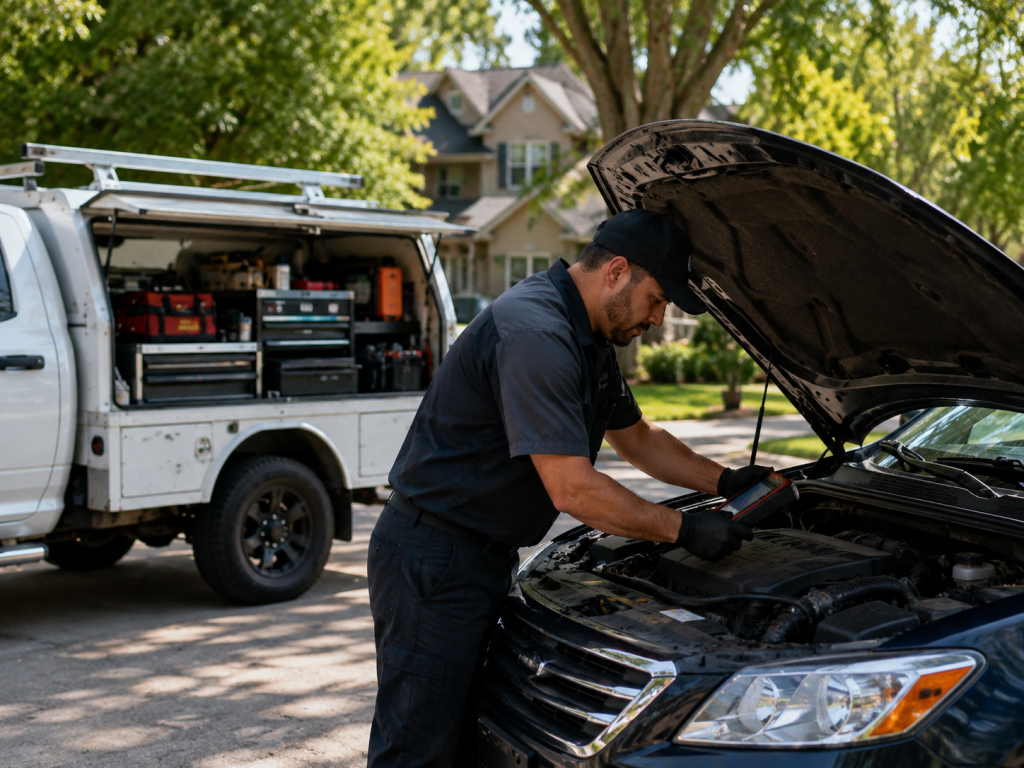
Given how much of this maintenance revolves around inspecting hard to reach undercarriage components and hoses tucked under the hood, having a technician come directly to your home or workplace anywhere in the Charleston area is often more practical than arranging a separate shop visit. A mobile mechanic can perform a thorough inspection of belts, hoses, and undercarriage components, applying protective treatments and catching early corrosion before it becomes a larger issue.
We covered the broader benefits of this approach in our article on why mobile mechanics are better than traditional auto shops in Charleston, which explains how convenience and local familiarity with Lowcountry conditions come together, particularly useful for this kind of ongoing coastal maintenance.
Protect Your Vehicle Before The Lowcountry Takes Its Toll
Charleston’s combination of salt air and humidity is simply part of life here, and while it means your vehicle needs more frequent attention than it would in a less demanding climate, most of the resulting damage is manageable with consistent habits and regular inspections. Catching wear early on belts, hoses, and undercarriage components can add years to the life of parts that would otherwise fail well before their time in this environment.
If it has been a while since your vehicle had a thorough inspection, visit our homepage to learn more about our services, or reach out through our contact us page to schedule a visit wherever your vehicle happens to be parked in the Charleston area.
A little proactive care now goes a long way toward keeping your car dependable despite everything the Lowcountry’s salt and humidity throw at it throughout the year.