
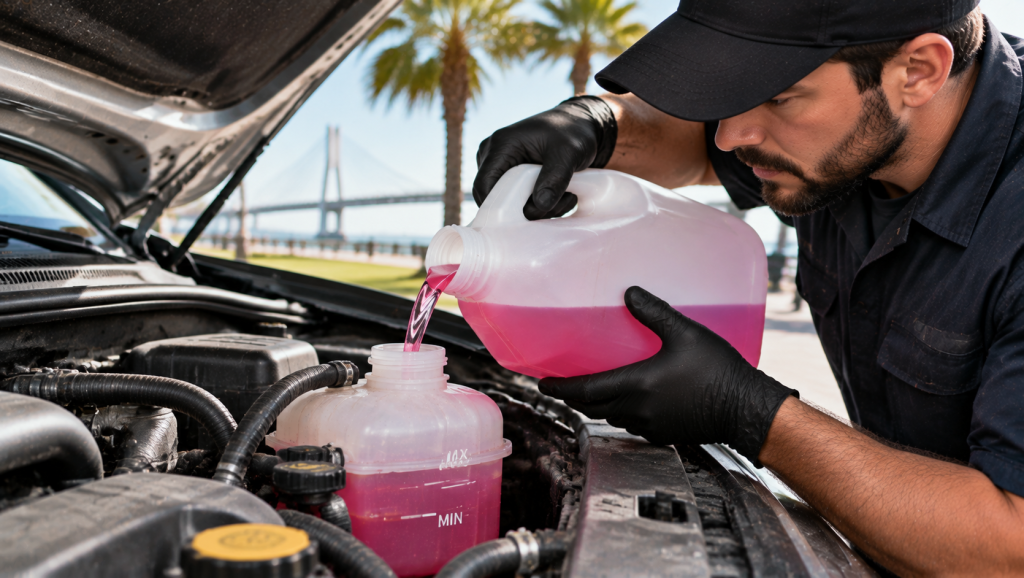
Engines run hot. Every time you drive, the combustion process creates a huge amount of heat, and the cooling system is what keeps that heat from damaging the engine. At the heart of that system is coolant, also called antifreeze, a fluid that does far more than most drivers realize. Like any fluid in your car, coolant wears out over time. When it does, it can stop protecting the engine and start contributing to problems. In a hot, humid place like the Lowcountry, the cooling system works hard, which makes fresh coolant especially important. This guide explains what coolant does, why old coolant causes damage, how to tell when it is time for a change and what a coolant flush actually involves. If you are searching for a coolant flush in Charleston, SC, here is what to know.
What Coolant Does
Coolant is a mix of antifreeze and water, and it has several jobs at once.
- It carries heat away from the engine. Coolant circulates through the engine, absorbs heat and moves it to the radiator, where the heat is released into the air.
- It protects against boiling and freezing. The mixture has a higher boiling point and a lower freezing point than plain water.
- It protects metal parts from corrosion. Coolant contains additives that coat internal surfaces and help prevent rust and corrosion.
- It helps lubricate parts such as the water pump seals.
That mix of protections is what makes coolant so important, and it is also why it cannot be replaced with plain water for long. Water alone does not protect against corrosion or extreme temperatures the way a proper coolant mix does.
Why Old Coolant Causes Damage
Coolant does not last forever. Over time, the protective additives get used up. Once they are gone, the fluid can become acidic and begin to attack the metals it touches. Heat cycles, contamination and normal aging all take a toll. Here is what can happen when coolant is left too long.
- Corrosion inside the engine and radiator. Without its additives, the fluid no longer shields metal surfaces, and rust and corrosion can form.
- Scale and deposits. Minerals and debris can build up and settle in narrow passages.
- Clogged radiator and heater core. Deposits and rust particles can block the small tubes, reducing how well the system moves heat. A clogged heater core can mean poor heat inside the cabin.
- Water pump wear. Dirty or worn out coolant can wear on the pump’s seals and bearings.
- Overheating. Reduced cooling efficiency can push the engine toward overheating, which is hard on every part of it.
- Damage to hoses, gaskets and seals. Old coolant can speed up wear on these parts.
- Serious engine damage. Repeated or severe overheating can warp parts or damage gaskets, leading to major repairs.
The takeaway is that coolant service is routine protection against much larger problems. It is one of those maintenance items that quietly saves engines.
When Should You Replace Coolant?
There is no single schedule that fits every vehicle. Different cars use different coolant types and have different service recommendations. The best source is your owner’s manual, which lists the coolant type and when the manufacturer says to replace it. Some manuals list a distance, some a time limit and some both. If you have bought a used car and do not know its service history, it is worth asking a technician to test the coolant. Do not assume it has been done.
Besides following the schedule, pay attention to the signs below that suggest it might be time sooner.
Signs Your Coolant May Need Attention
- The coolant looks rusty, brown, cloudy or muddy in the reservoir. It should look clean, not murky.
- There is sludge, floating particles or an oily film in the reservoir or radiator. An oily look can indicate a more serious problem and should be checked right away.
- The temperature gauge runs higher than normal or climbs in traffic.
- The heater does not blow warm air or is slow to warm up.
- The coolant level keeps dropping. That can mean a leak somewhere in the system.
- A sweet smell around the car or under the hood. Coolant has a distinct sweet odor, and it can mean a leak.
- Puddles under the car. Coolant leaks often show up as colored fluid.
- A warning light or message about engine temperature or coolant level.
- Steam from under the hood. If this happens, pull over safely and turn the engine off. Do not open the hood or the radiator cap while it is hot.
Coolant Flush vs. Drain and Fill
You may hear different terms for coolant service, and they are not always the same thing.
- Drain and fill removes some of the coolant from the system and replaces it with fresh coolant. Some old fluid stays in the engine and passages.
- Coolant flush uses equipment to circulate fluid through the system and push out most of the old coolant and any loose debris before filling with fresh coolant.
Which one is right depends on the vehicle, the condition of the coolant and what the manufacturer recommends. A technician can help you choose. In either case, the system should be refilled with the right coolant type and any trapped air should be removed so the engine does not run with air pockets that cause hot spots.
Use the Right Coolant
Not all coolant is the same. There are different formulas designed for different engines and metals, and using the wrong one can reduce protection or cause problems. Coolant colors are not a reliable guide, since the same color can mean different things from different brands. Always use the type your owner’s manual calls for, and do not mix types unless the manual or a technician says it is safe. Also pay attention to whether you need a ready to use mix or a concentrate that has to be diluted, and use the right water if mixing.
Safety Notes
- Never open the radiator or coolant reservoir cap when the engine is hot. The system is under pressure, and hot coolant can spray out and cause serious burns.
- Keep coolant away from children and pets. It tastes sweet but is toxic if swallowed. Clean up spills right away.
- Do not pour used coolant down a drain or onto the ground. It should be collected and disposed of properly. A professional will handle this for you.
- Do not ignore an overheating engine. Pull over safely and shut the engine off. Driving an overheated engine can cause serious damage.
Why the Lowcountry Is Hard on Cooling Systems
Heat and humidity put the cooling system to work for much of the year. Air conditioning adds extra load. Stop and go traffic means less airflow through the radiator. Salty, humid air can also speed up corrosion on the outside of radiators, hose clamps, fittings and other parts under the hood. Our guide on salt air and humidity and a Charleston car owner’s maintenance guide covers more of what the coastal air does to a vehicle.
Cooling System Checks Before Hurricane Season Travel
If you ever have to evacuate, you may spend hours in slow, heavy traffic in the heat, and that is a hard test for a cooling system. A car that runs fine on short trips may overheat when stuck in a long line of cars. Making sure the coolant is fresh, the level is right and the hoses and belts are in good shape is a smart part of preparing your car. You can find more in our hurricane car prep checklist.
How to Keep Your Cooling System Healthy
- Follow the schedule in your owner’s manual for coolant service.
- Check the coolant level in the reservoir now and then, when the engine is cool.
- Use the right coolant mix.
- Look at hoses and clamps for cracks, bulges, leaks or soft spots.
- Keep the front of the radiator clear of leaves and debris.
- Fix leaks early. A small leak can become a big one quickly.
- Watch the temperature gauge.
- Have the system inspected if you notice any warning signs.
How a Mobile Mechanic Can Help
Coolant service is a good fit for a mobile mechanic. A technician can come to your home or workplace, test the coolant, inspect hoses, the radiator cap and visible parts of the system, and perform a drain and fill or a flush, depending on what your car needs. Used coolant is collected and handled properly. If the inspection turns up something larger, such as a failing water pump, a leaking radiator or a suspected head gasket problem, that work may need more time or a shop with specialized equipment, and a good technician will tell you honestly what can be done at your location.
Quick Coolant Checklist
- Check your owner’s manual for the coolant type and schedule.
- Look at the color and clarity of the coolant.
- Watch for overheating, a weak heater, leaks and sweet smells.
- Never open the cap on a hot engine.
- Use the right coolant and do not mix types.
- Have the coolant tested if you do not know its history.
- Do not put off service until the engine overheats.
Fresh coolant is a small step that protects one of the most important parts of your car. If you would like help with coolant service or a cooling system check, visit the Mobile Mechanic Pros of Charleston homepage to learn more, or contact us to schedule a visit.